By
By 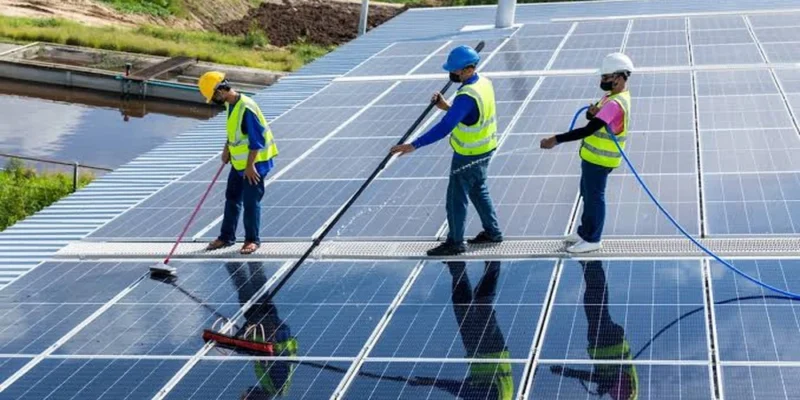
Your panels look fine from the driveway. They’re still generating power. So why would you pay someone to clean them? Because “looks fine” and “performing at capacity” are two very different things, and in Honolulu, the gap between those two states widens faster than almost anywhere else in the country.
Solar panel soiling is quiet. It doesn’t trip an alarm or flash a warning on your inverter dashboard. It just slowly, steadily bleeds kilowatt-hours out of a system you paid tens of thousands of dollars to install. By the time a panel looks visibly dirty, a significant chunk of its output is already gone. Understanding why that happens here, and what to do about it, is the most practical thing a Hawaii solar owner can learn.
Honolulu’s Solar Boom Makes This Problem Bigger Every Year
Hawaii isn’t dipping its toe into solar. It’s all in. About 26% of Hawaiian Electric’s residential customers and 43% of customers in single-family homes now have rooftop solar , making it one of the highest adoption rates of any state in the country. In 2024 alone, 7,976 new solar systems were added, and total solar generating capacity across residential, commercial, and grid-scale systems reached 1,410 megawatts, a 13% year-over-year increase , according to Hawaiian Electric’s 2025 report.
That’s a lot of panels. And almost all of them are sitting in an environment that aggressively degrades performance the moment cleaning stops. More homeowners investing in solar means more homeowners dealing with the same invisible maintenance problem, usually without realizing it.
The SALT-VANT Framework: Six Reasons Honolulu Is Uniquely Harsh on Panels
Most soiling guides treat dust as the villain. In Honolulu, the threat matrix is more complex. Here’s a way to think about it: SALT-VANT, six overlapping soiling factors specific to the Oahu environment.
- Salt: Coastal air deposits a thin saline film across panel surfaces, which then bonds with other particles and bakes on under sun exposure.
- Ash and vog: Volcanic gas emissions from the Big Island drift toward Oahu regularly. Vog carries fine sulfur dioxide particles that form a sticky residue on glass surfaces.
- Litter from birds: Mynahs, doves, and other local birds are prolific. Bird droppings cause localized hotspots that can permanently stress individual cells if left untreated.
- Trade winds: The steady northeast trades carry red laterite soil and organic particulates from inland vegetation, depositing a fine layer that compounds daily.
- Angle and orientation: Many Honolulu rooftops have low-pitch installations to satisfy permitting aesthetics, which means runoff is poor and rain rarely provides a meaningful cleaning effect.
- Not-visible grime: A bio-film of algae and pollen begins forming well before you can spot it by eye, cutting light transmission before any visible change appears on the surface.
No single factor destroys a panel on its own. The combination is what makes Honolulu a particularly unforgiving environment for panels that aren’t on a maintenance schedule.
How Much Output Are You Actually Losing?
The numbers here are sobering, and they come from controlled research rather than sales copy. Dust accumulation on photovoltaic panels can result in efficiency losses ranging from 10% in mild conditions to over 40% in arid or coastal regions with mixed contaminants , according to a 2024 review published in Energy Nexus on ScienceDirect. And that’s just dust. Add salt, vog residue, and bio-film, and you’re stacking losses.
A peer-reviewed study in the International Journal of Photoenergy, found that accumulated soiling shortens panel lifespan and reduces efficiency by about 15% to 20% , based on testing across roof-mounted systems in comparable climatic conditions. The ScienceDirect review on dust effects further notes that the type of contaminant matters enormously: bird droppings and dirt spots shade portions of solar cells, causing hotspots, which are small regions of a module that heat up excessively and accelerate cell degradation .
Here’s a concrete way to think about what that means for a Honolulu homeowner. Say your 10-panel system was sized to cover most of your electricity bill when installed. At a 15% soiling loss after several months without cleaning, you’re effectively running a 8.5-panel system and paying Hawaiian Electric for the gap. Over a full year, that’s real money leaving your account every billing cycle, money your system was designed to save.
“Dust particles impede light transmission, raise cell temperatures, and increase resistive losses, leading to reduced output power.” This finding, drawn from a comprehensive 2024 soiling review in Energy Nexus, reinforces why visual inspection alone is an unreliable maintenance strategy.
When Should You Actually Schedule a Cleaning?
There’s no single answer that works for every Honolulu property, but you can build a reasonable decision framework from what the research shows about accumulation timelines. Natural dust has a proportionate influence on performance depending on how long it accumulates, with a 13% decline in output power occurring after three months of accumulation , according to a study in the Journal of Sustainable Development of Energy, Water and Environment Systems. That timeline shortens in coastal or high-vog conditions.
A practical cleaning schedule for most Honolulu residential systems looks like this:
- Every 3 to 4 months if your home is within a mile of the coast, under a flight path, or regularly affected by vog.
- Every 5 to 6 months if you’re in an inland neighborhood with moderate tree coverage and good roof pitch for natural runoff.
- After any significant weather event, including trades-driven dust storms or vog episodes that leave a visible haze on outdoor surfaces.
- Before any home sale or refinance that includes a solar system appraisal, since panel condition directly affects assessed value.
This schedule isn’t about keeping your panels pretty. It’s about protecting the return on investment you signed up for when you went solar. If your inverter app shows a production dip you can’t explain by cloud cover or seasonal sun angle, soiling is the most likely culprit.
Professional Cleaning vs. DIY: The Case for Calling Experts
Climbing on a roof with a garden hose sounds simple until it isn’t. Untreated tap water leaves mineral deposits that create a new soiling layer almost immediately. Pressure washing can micro-crack panel glass or void manufacturer warranties. And working on a pitched, wet roof in Honolulu heat carries real physical risk that no amount of YouTube confidence erases.
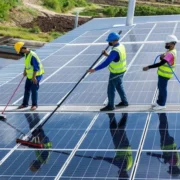
Professional cleaning services bring deionized or purified water systems, soft brush equipment designed to avoid surface abrasion, and in many cases, thermal imaging tools that identify underperforming cells invisible to the naked eye. For owners who invested in quality panels, the cleaning process should match that standard. Choosing solar panel cleaning in Honolulu, HI, from a certified local provider means you’re also getting someone who understands the specific contaminants your panels face, not a generic maintenance crew working from a mainland checklist.
The difference between a clean panel and a soiled one isn’t always visible. But it shows up on your electric bill every single month until you fix it.
Your Investment Deserves an Active Maintenance Plan
Going solar in Honolulu is one of the smartest financial moves a homeowner can make, given local electricity rates and the intensity of available sunlight. But the return you calculated when you signed the installation contract assumed panels operating near their rated output. Soiling erodes that assumption quietly and consistently.
A cleaning and inspection schedule isn’t an added cost. It’s the maintenance that keeps the original investment performing the way it was designed to. If you haven’t had your panels cleaned in the past four months, the question isn’t whether you’re losing output. It’s how much.