By
By 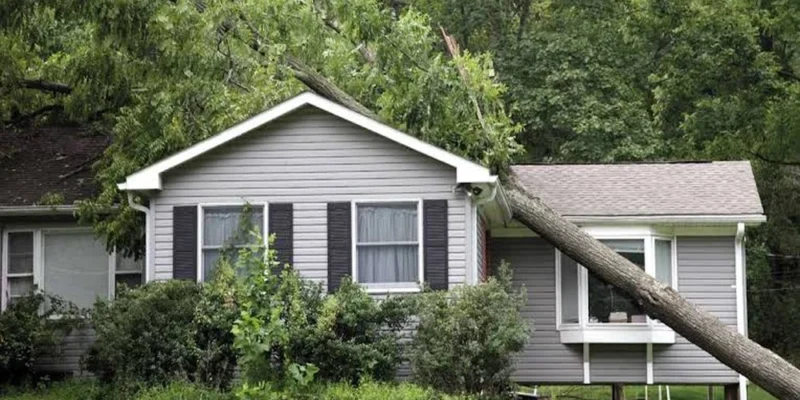
Your home’s exterior takes every punch the sky throws. Hail in May. Sub-zero wind chill in January. A week of freeze-thaw cycling that does more structural damage than most storms. And most homeowners don’t notice a thing until they’re standing in a water-damaged basement wondering where it started.
It started outside. It almost always does.
Understanding what weather actually does to your home’s outer shell – and which materials survive it versus which ones quietly fail – is one of the most practical things you can learn as a homeowner. This article breaks it down by threat type, explains the material science in plain language, and gives you a decision tool you can use before you spend a dollar on repairs.
The Four Weather Threats That Win Most Often
Not all weather damage is equal, and not all climates share the same risk profile. But four threats account for the vast majority of exterior failure in American homes, especially in the Upper Midwest.
Freeze-thaw cycling is the quiet killer. Water gets into a tiny gap in siding, caulk, or trim. Overnight temperatures drop below freezing. The water expands by roughly 9% as it becomes ice, widening the gap. It thaws. More water enters. Repeat 40 to 60 times in a single Minnesota winter and that “tiny gap” is now a channel feeding moisture directly into your wall cavity.
Hail is faster and more obvious. Golf ball-sized hailstones hit vinyl siding at terminal velocity and crack it. They dent aluminum. They chip fiber cement. Even when the damage looks cosmetic, cracked siding loses its ability to shed water cleanly, and the problems compound from there.
Wind-driven rain is sneaky because it finds angles that gravity-driven rain never reaches. Horizontal rain at 50 mph gets behind poorly sealed panels, saturates housewrap, and can travel laterally inside a wall before dripping down to cause rot or mold growth far from the original entry point.
UV exposure rarely makes the dramatic damage list, but it degrades plasticizers in vinyl, fades pigments, and embrittles sealants over a decade of summers. A panel that looked fine at year three can crack on impact at year twelve – not because it was hit harder, but because years of UV exposure robbed it of flexibility.
What Each Siding Material Actually Does Under Pressure
Here’s a straight comparison of the four materials homeowners most commonly choose, judged against the four threats above. Real performance, not marketing copy.
| Material | Freeze-Thaw | Hail Impact | Wind-Driven Rain | UV Resistance |
|---|---|---|---|---|
| Vinyl | Good (no absorption) | Moderate (can crack) | Good (if sealed) | Moderate (degrades over time) |
| LP SmartSide (Engineered Wood) | Excellent (treated for moisture) | Excellent (high impact rating) | Very Good | Excellent |
| Fiber Cement | Excellent | Excellent | Excellent | Excellent |
| Steel | Excellent | Very Good | Excellent | Very Good (factory finish) |
Vinyl’s main advantage is price and zero water absorption, which makes freeze-thaw less of a risk at the panel level. The risk shifts to the seams and fastener points. Engineered wood and fiber cement punch above their weight on impact resistance, which matters significantly in hail-prone states. Steel is underrated: it won’t crack, rot, or warp, and in a state like Minnesota where both hail seasons and brutal winters are facts of life, it’s worth serious consideration.
The Minnesota Exterior Stress Test
Before picking a material, run your home through what I call the Minnesota Exterior Stress Test. It’s a four-question sequence that filters your options based on your actual exposure rather than a general “durability” claim.
- How many freeze-thaw cycles does your home experience per winter? If you’re north of the Twin Cities, count on 40 or more. That rules out any material with porous surface coatings or face-nailed installation methods that can loosen over repeated cycles.
- Is your home in a documented hail corridor? Minnesota and Wisconsin both sit inside one of the most active hail belts in the country. If the answer is yes, prioritize impact-rated products – LP SmartSide, fiber cement, and steel all carry manufacturer impact ratings you can verify.
- What direction do your most exposed walls face? South and west exposures get the most UV and the most wind-driven rain. Those walls need your most durable material, and they’re often the walls where builder-grade vinyl fails first.
- What’s your wall system underneath? New siding over deteriorated housewrap or absent air sealing is a cosmetic fix, not a structural one. The shell only works as well as the system behind it.
This test won’t make the decision for you, but it forces you to think about your home as a system rather than a surface. That shift in thinking is worth more than any single product upgrade.
Why More Homeowners Are Taking the Exterior Seriously Right Now
Homeowners have been investing heavily in their properties. According to the most recent American Housing Survey from the U.S. Census Bureau, American homeowners spent about $827 billion on home improvement projects in the two-year period ending in 2023 , an increase of more than $200 billion over the prior period. A significant portion of that spending is driven by homeowners who are staying put rather than moving, and who’ve decided that protecting and improving the home they already own is the smarter play.
Exterior work sits squarely in that logic. New siding isn’t just about curb appeal. It’s about closing the gaps that weather exploits every single season.
Energy performance is another driver. According to the EPA’s ENERGY STAR program, homeowners can save an average of 15% on heating and cooling costs by air sealing their homes and adding insulation, because air leaking through the home’s envelope – the outer walls, windows, doors, and other openings – wastes significant energy. Quality siding, installed correctly over a sealed and insulated wall system, contributes directly to that envelope performance. This is why contractors who install durable exterior siding solutions will often recommend evaluating your insulation and housewrap at the same time as your panels. The two systems work together.
“Air that leaks through your home’s envelope wastes a lot of energy and increases your utility costs. A well-sealed envelope, coupled with the right amount of insulation, can make a real difference on your utility bills.” – U.S. Environmental Protection Agency, ENERGY STAR
A Real Scenario Worth Thinking Through
Consider a 1990s colonial in the St. Paul suburbs. South and west walls clad in original builder-grade vinyl. The panels have never been replaced. A hailstorm in June cracked three panels on the west side. The homeowner patched them with caulk. Two winters later, water has been entering through those patches every freeze-thaw cycle, the OSB sheathing behind the west wall is soft and discolored, and the interior drywall on that side of the house shows faint ghost staining near the baseboard.
Total repair cost at this point: not a siding replacement. A siding replacement plus sheathing repair plus interior remediation. The original patch cost maybe two hours of weekend time. The deferred problem cost significantly more and took the house off the market for six weeks during a planned sale.
That’s the actual math on “I’ll deal with it later.” Weather doesn’t pause while you’re busy.
What a Good Installation Actually Includes
Product choice matters, but installation quality is where most exterior projects succeed or fail. A few things worth confirming before any crew starts work:
- Housewrap or water-resistive barrier is inspected, repaired, or replaced before new panels go up – not covered over.
- All penetrations (electrical boxes, hose bibs, vents) are flashed and sealed before siding is installed around them.
- Panels are installed with correct fastener spacing for the specific product and climate zone – not just “close enough.”
- Trim, corners, and J-channels are caulked with a product rated for the temperature extremes of your region.
These aren’t extras. They’re the difference between siding that lasts 30 years and siding that looks fine for three and fails quietly for the next ten.
Your home’s exterior is the first and most punished line of defense against everything the climate sends its way. The material you choose, the installation method behind it, and the moment you decide to act all add up to how much that defense actually holds. Weather won’t give you a warning before it goes to work on the next weak point it finds.